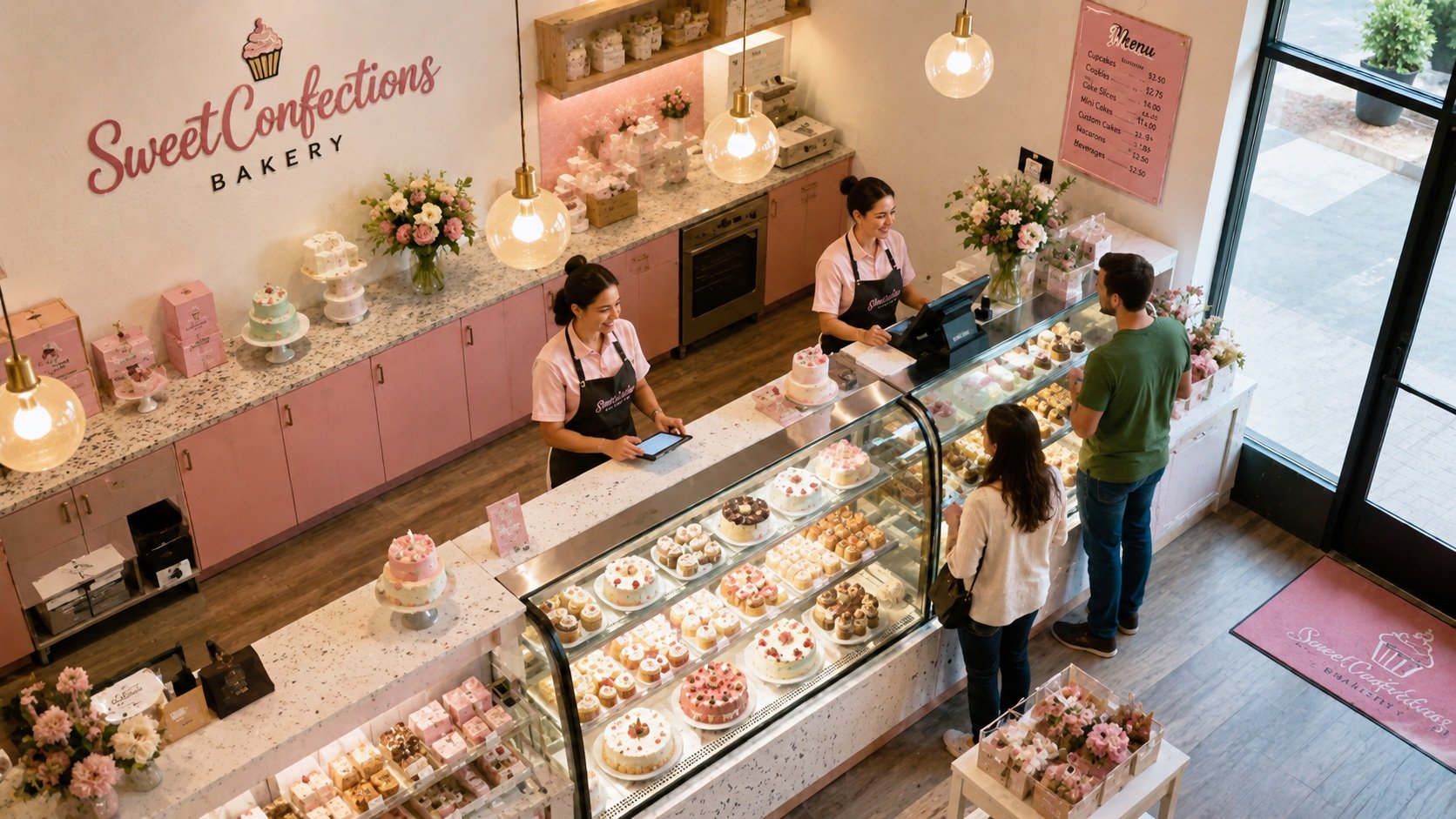
Custom Cake Consultations
Scenario-Based Workplace Learning | Articulate Rise 360
Overview
Custom Cake Consultations is a scenario-based workplace learning experience designed to help bakery employees conduct confident, customer-centered custom cake consultations. Rather than memorizing products or procedures, learners practice asking thoughtful questions, recommending appropriate options, clarifying customer expectations, and confirming complete order details before entering an order.
Designed for front-of-house bakery staff, the course focuses on communication and decision-making skills that improve order accuracy while creating a positive customer experience. Throughout the course, learners receive immediate feedback as they apply a repeatable consultation process in realistic customer scenarios.
Built in Articulate Rise 360, the course combines guided instruction, authentic workplace scenarios, knowledge checks, and performance-focused practice to prepare front-of-house bakery staff for real customer interactions.
Note: SweetConfections Bakery is a fictional organization created for this instructional design portfolio project.
Performance Challenge
Custom cake consultations require employees to balance customer service, product knowledge, and attention to detail—all while gathering accurate information in a limited amount of time. New employees often jump directly to solutions, overlook important questions, or fail to confirm customer expectations before entering an order.
This learning experience addresses those performance gaps by teaching a structured consultation process that employees can immediately apply on the job.

Learners practice realistic customer consultations with immediate feedback in branching scenarios.
Project Snapshot
Audience: Front-of-house bakery staff
Tool: Articulate Rise 360
Format: Scenario-Based eLearning
Duration: 12-15 minutes
The Learning Objectives
After completing this course, learners will be able to:
Ask discovery questions to understand a customer's needs before recommending options.
Recommend cake options that align with the customer's goals and explain why they fit.
Clarify customer expectations before committing to a design or order.
Confirm all consultation details accurately before entering the order.

My Role
Instructional design and learning strategy
Performance analysis and learning objective development
Storyboarding and content sequencing
Scenario writing and feedback design
Articulate Rise 360 development
Assessment design
AI-assisted visual design and prompt engineering
Accessibility review and quality assurance
Iterative design refinement
Design Strategy
Start with the customer's goal.
Rather than teaching products first, the course begins by helping learners discover what the customer is trying to accomplish before making recommendations.
Build a repeatable consultation process.
Instruction follows a simple framework—Ask, Recommend, Clarify, Confirm—so employees leave with a process they can consistently apply on the job.
Practice through authentic conversations.
Instead of reading about customer service, learners practice responding to realistic customer interactions and receive coaching throughout each scenario.
Reinforce decisions with immediate feedback.
Knowledge checks and scenarios explain not only the correct response but also why it supports better customer communication and more accurate orders.
Focus on workplace performance.
Every activity supports a practical job task employees perform during a real custom cake consultation.
Course Features
Learners practice responding to realistic customer situations through guided, decision-based conversations.
Scenario-Based Conversations
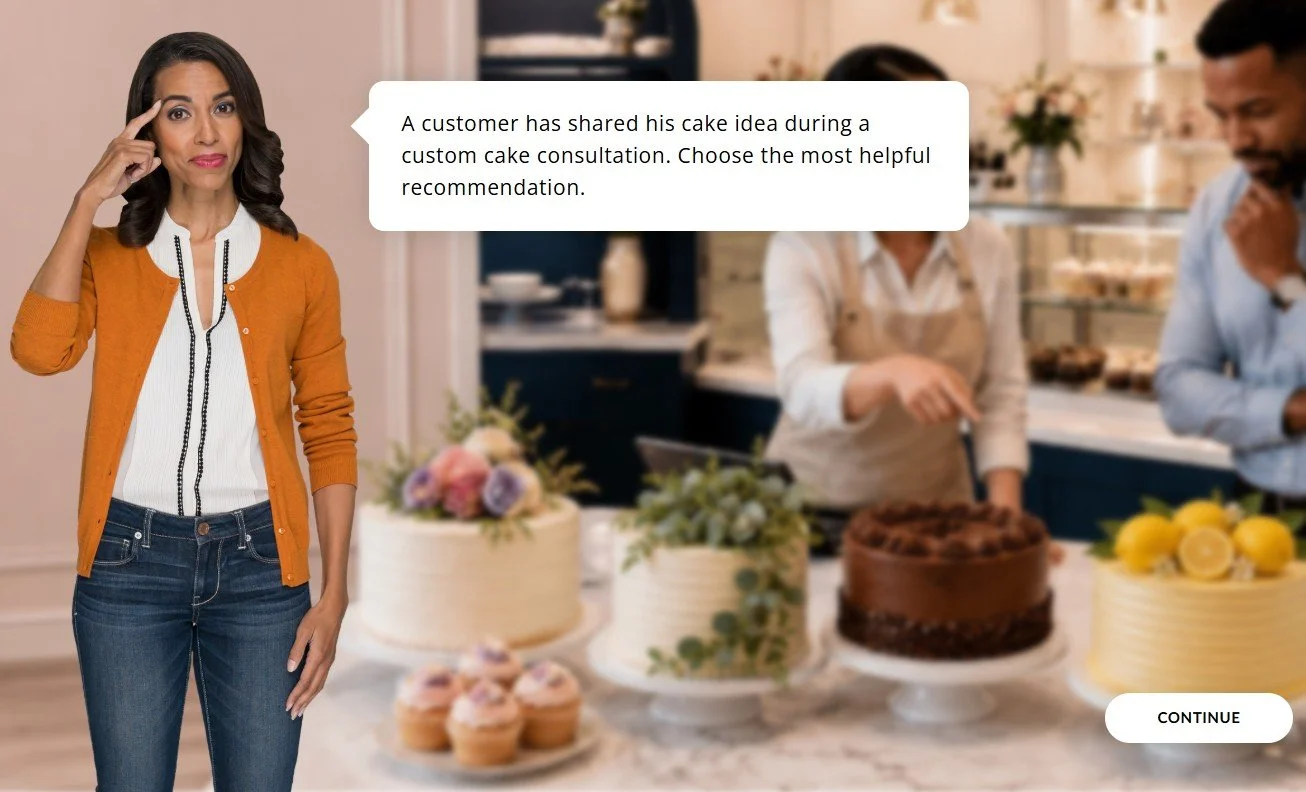
Learners are introduced to realistic customer situations that mirror conversations they are likely to encounter at the bakery counter.
1. Scenario Introduction
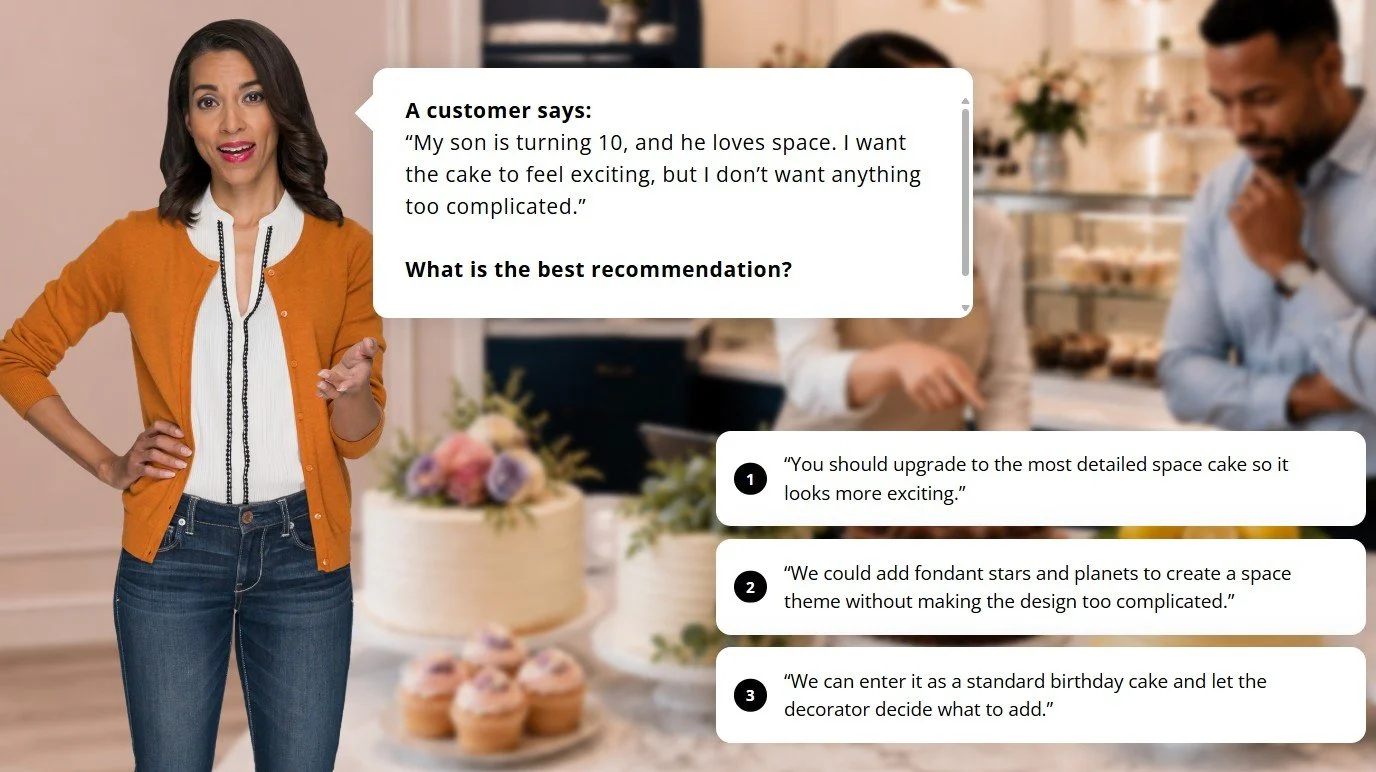
Rather than reading about best practices, learners choose how they would respond before receiving guidance.
2. Decision Point
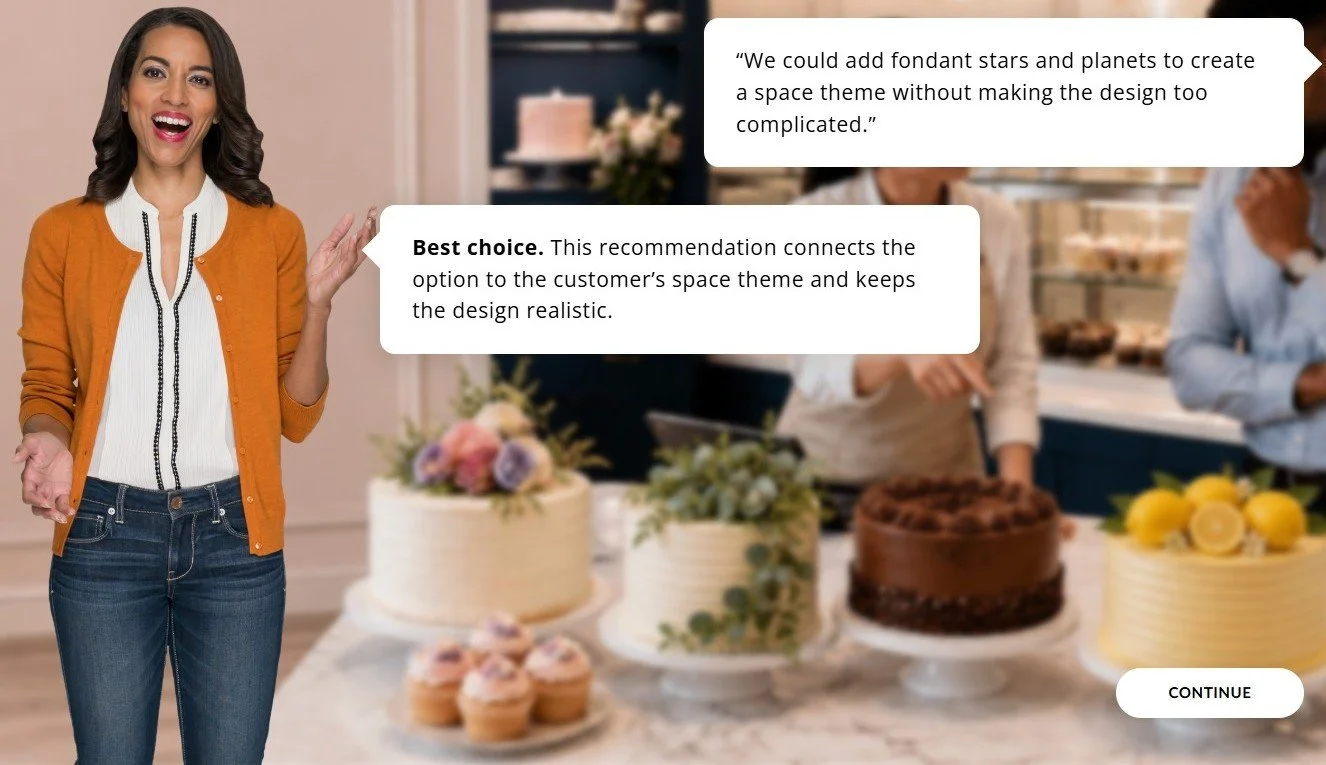
Targeted feedback explains why the selected response is effective, reinforcing the consultation skills taught throughout the course.
3. Immediate Coaching
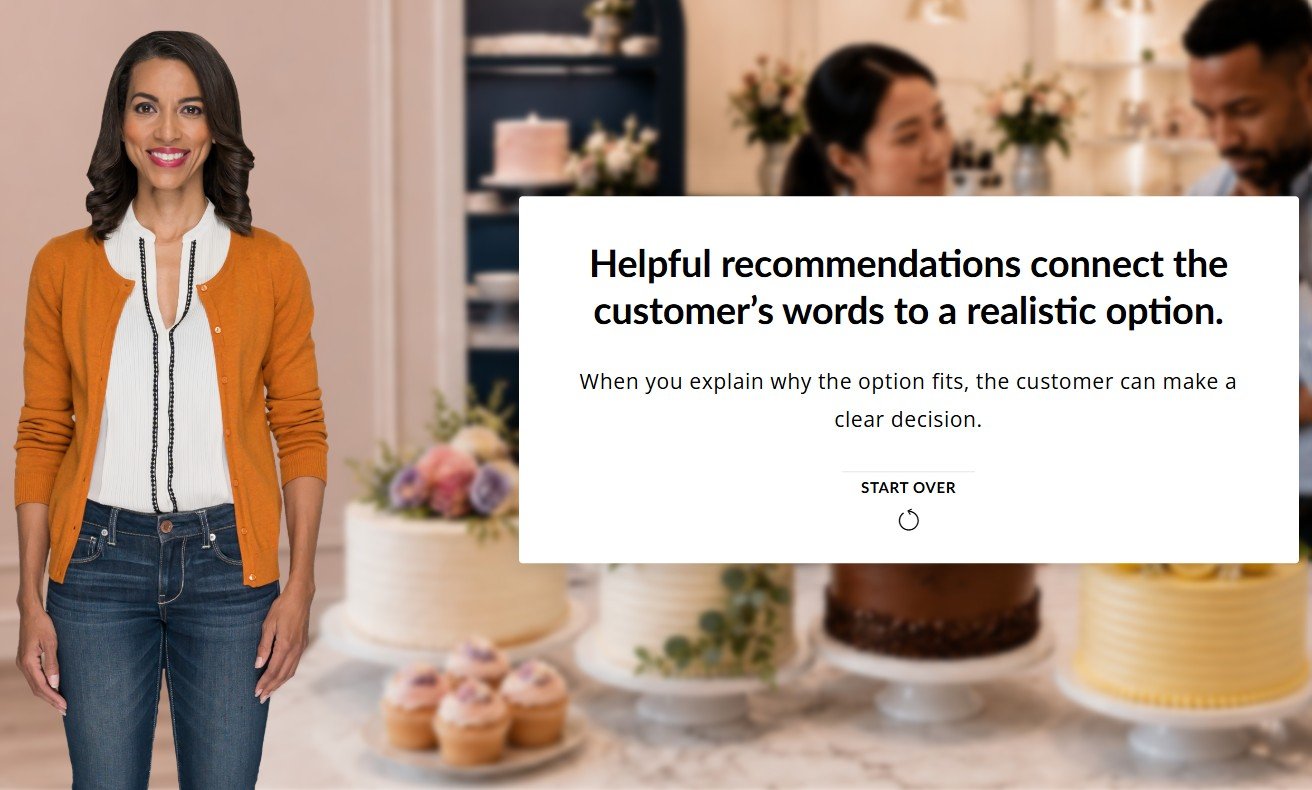
Each scenario concludes with a concise takeaway that reinforces the key consultation skill before learners continue to the next activity.
4. Continue the Conversation
Design Process
Rather than beginning with content, I started by identifying the workplace performance gap and the business outcomes the training was intended to support. The course was designed to help bakery staff follow a consistent consultation process that improves customer satisfaction, reduces clarification calls, and increases opportunities to recommend premium options.
Performance-First Design
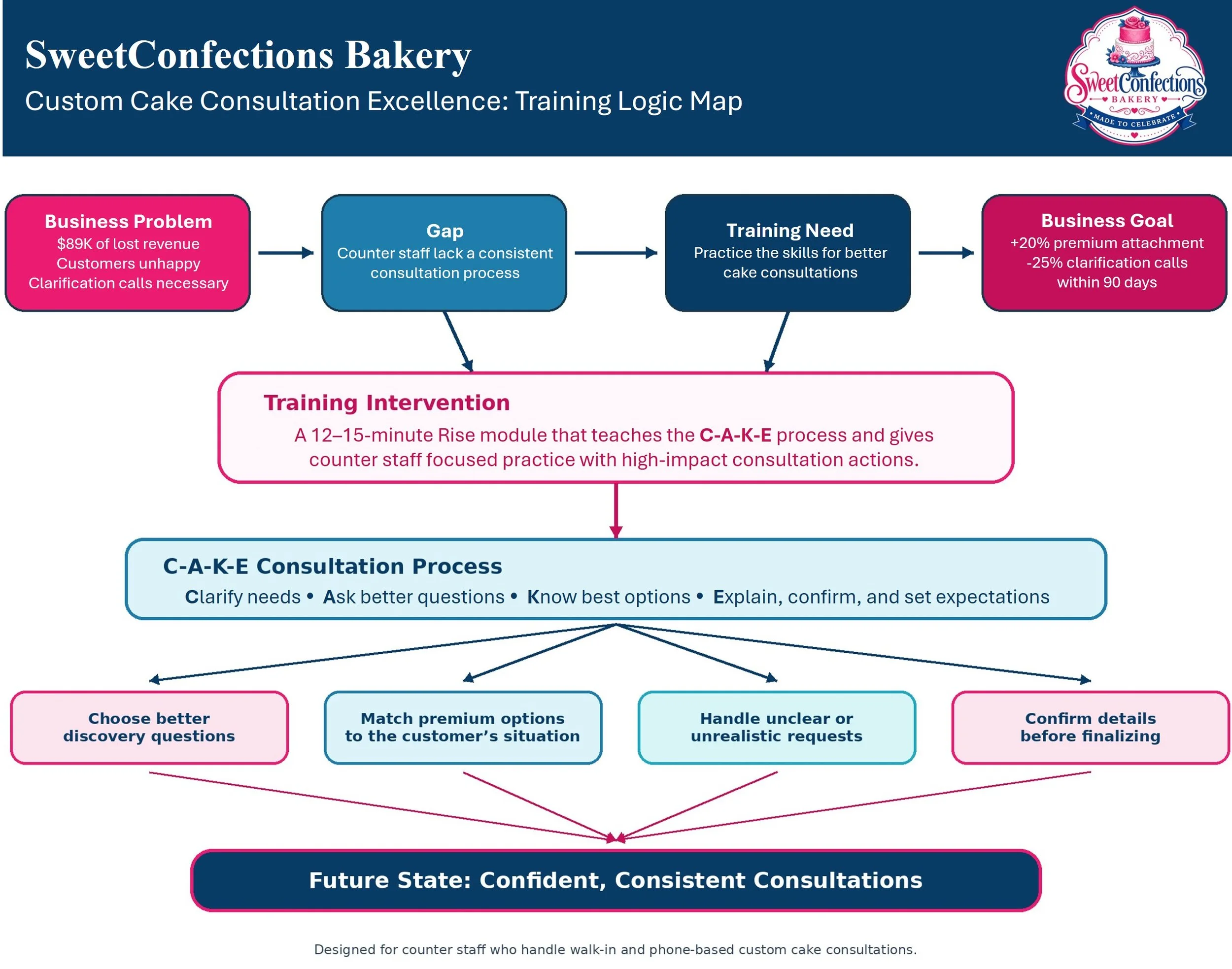
Training Logic Map. This planning artifact connects the business problem, performance gap, training need, learning intervention, and desired future state. It served as the blueprint for the course's learning objectives, scenarios, and assessments.
Using the training logic map as a guide, I organized the course around the C-A-K-E consultation process. Each lesson develops one consultation skill through realistic scenarios, guided decision-making, immediate feedback, and opportunities to apply the process before progressing to the next stage.
From Strategy to Practice
Scenario Storyboarding
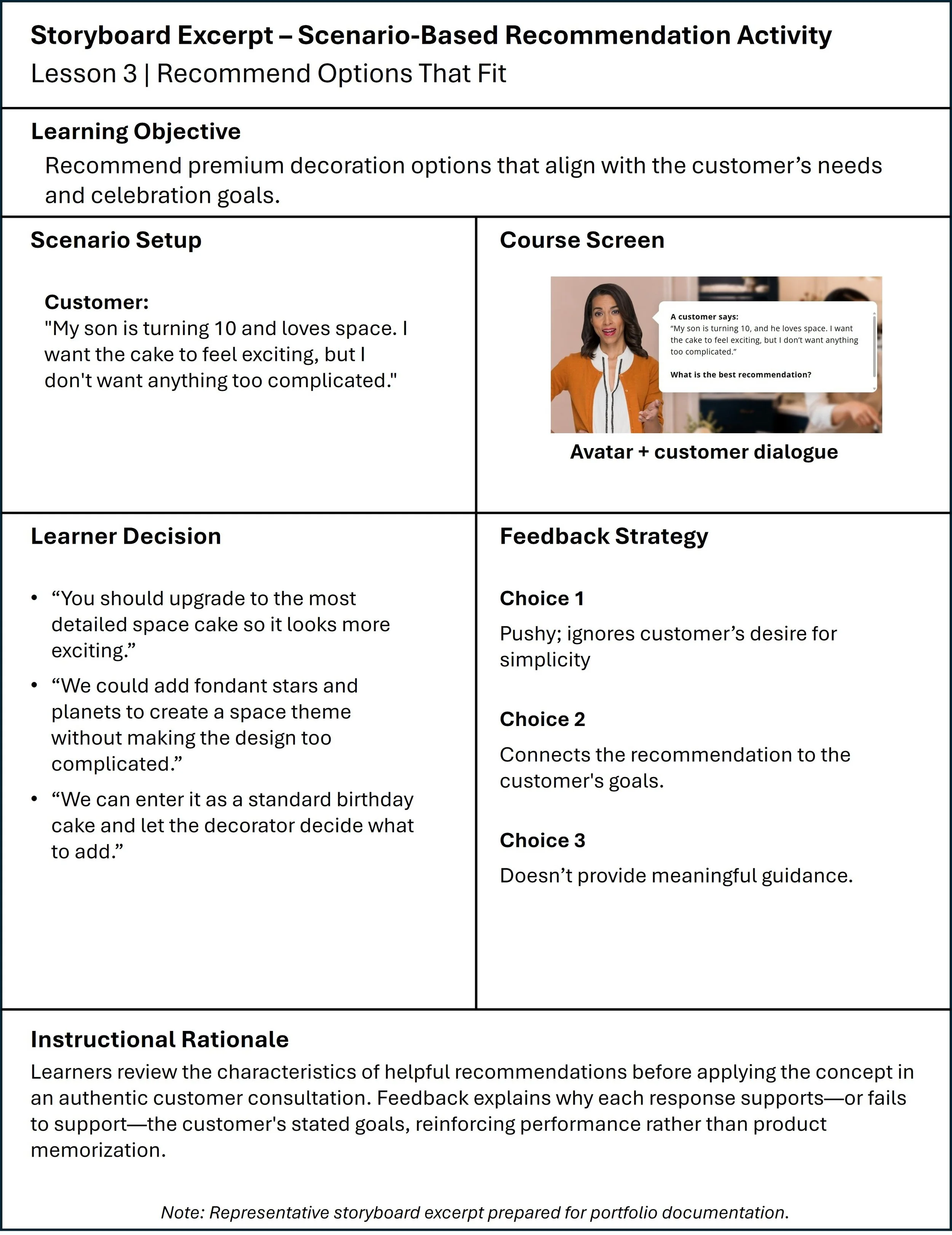
This representative storyboard excerpt illustrates how the consultation strategy was translated into a learner interaction. The scenario aligns the learning objective, realistic customer dialogue, decision options, feedback, and instructional rationale to reinforce performance-based learning.
Reflections
Designing this course reinforced the importance of starting with workplace performance rather than content. Instead of teaching product information, I focused on the consultation behaviors that help bakery staff ask better questions, recommend appropriate options, clarify expectations, and confirm details before entering an order.
Developing realistic scenarios also highlighted how small changes in wording, feedback, and learner choices can significantly improve decision-making practice. Creating supporting design artifacts—including the training logic map and representative storyboard excerpt—strengthened the connection between the business need, instructional strategy, and final learning experience.