
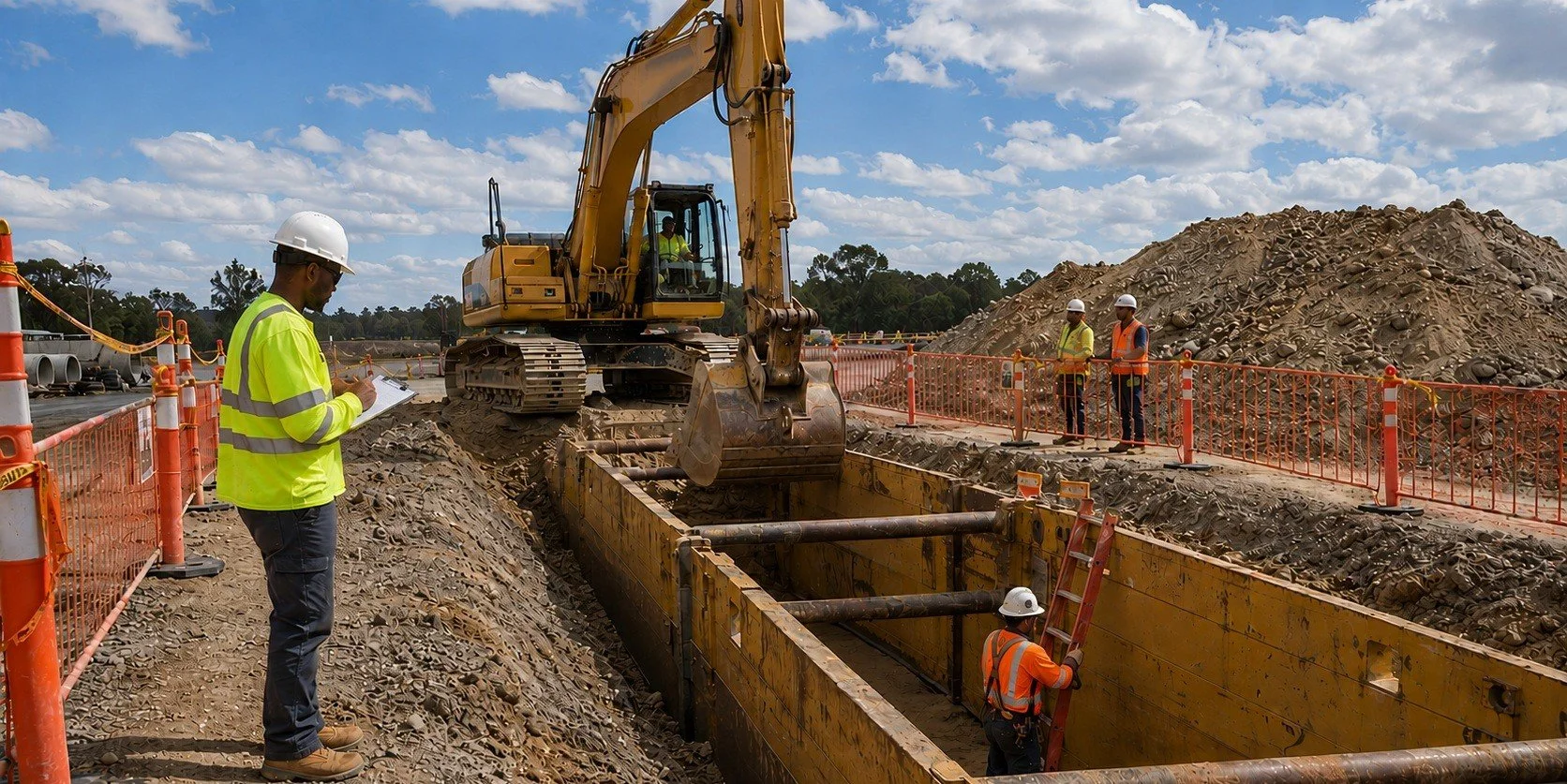
Excavation Safety and Decision-making
Recognizing Excavation Red Flags
Storyline 360 | Scenario-Based Learning | Hotspots | Decision-Making | Performance-Based Assessment
Overview
Construction workers often encounter changing excavation conditions that require careful observation and sound judgment. Rather than asking learners to memorize OSHA regulations, this module focuses on helping them recognize potential excavation site red flags, distinguish between routine jobsite conditions and conditions that require further evaluation, and decide on the appropriate next step.
Developed to demonstrate performance-based instructional design, this Storyline module emphasizes authentic workplace decision-making through realistic excavation scenes, guided practice, targeted feedback, and performance-based assessment. The course combines technical accuracy with instructional design principles to help learners build practical hazard-recognition skills that transfer to authentic jobsite situations.
Note: PrairieWorks Excavation Services is a fictional organization created for this instructional design portfolio. The course content is based on authentic excavation safety concepts and realistic jobsite conditions.
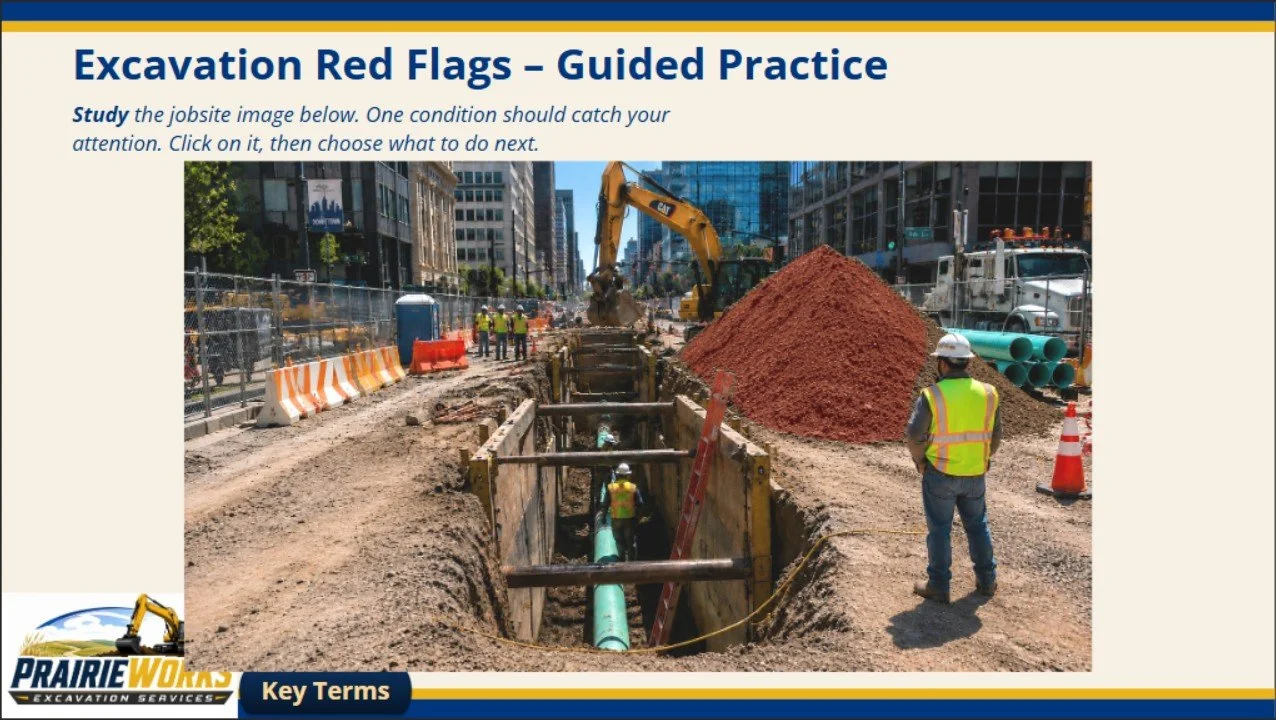
Learners identify the unsafe spoil pile location before selecting the appropriate next action.
Project Snapshot
Audience: Construction workers
Tool: Articulate Storyline 360
Learning strategy: Scenario-based learning
Focus: Hazard recognition & workplace decision-making
Assessment: Performance-based
Duration: 15–20 minutes
The Challenge
Construction workers rarely have time to stop and analyze every condition they encounter. Jobsite conditions change quickly, requiring workers to recognize when something deserves closer attention without becoming overwhelmed by every routine condition.
Traditional excavation training often emphasizes regulations and terminology, but recognizing hazards in realistic jobsite environments requires observation, judgment, and decision-making. I wanted learners to practice distinguishing between normal conditions and potential red flags before choosing an appropriate next action.
The design challenge was to create an experience that develops hazard-recognition skills through authentic practice rather than memorization.

Design Decisions
To help learners develop hazard-recognition skills, I made the following design decisions:
Realism
Authentic jobsite imagery to support realistic visual hazard recognition.
One meaningful red flag per scene to mirror authentic decision-making while avoiding unnecessary cognitive overload.
Learning Experience
Observation before instruction so learners first analyze the scene independently before receiving guidance.
Hotspot interactions that require learners to identify the condition requiring further evaluation—not simply click obvious hazards.
Performance
Decision-making scenarios focused on choosing the appropriate next action rather than recalling OSHA regulations.
Targeted explanatory feedback that reinforces reasoning instead of simply indicating correct or incorrect responses.
Performance-based assessment using realistic excavation scenarios that mirror workplace decisions.
Design & Development Process
The instructional strategy was translated into Storyline through a structured instructional design and development workflow. Each stage built on the previous one—from learner analysis and learning architecture to storyboard development, Storyline implementation, and iterative refinement—to create an authentic, performance-based learning experience.
Analyze
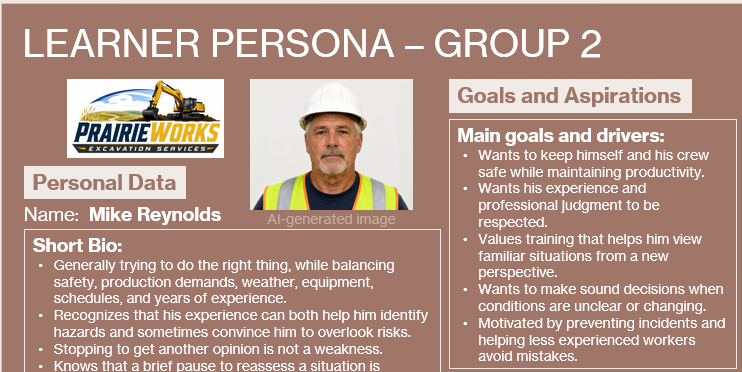
Learner personas identified the decision-making challenges experienced by different construction workers and informed the instructional approach.
Design
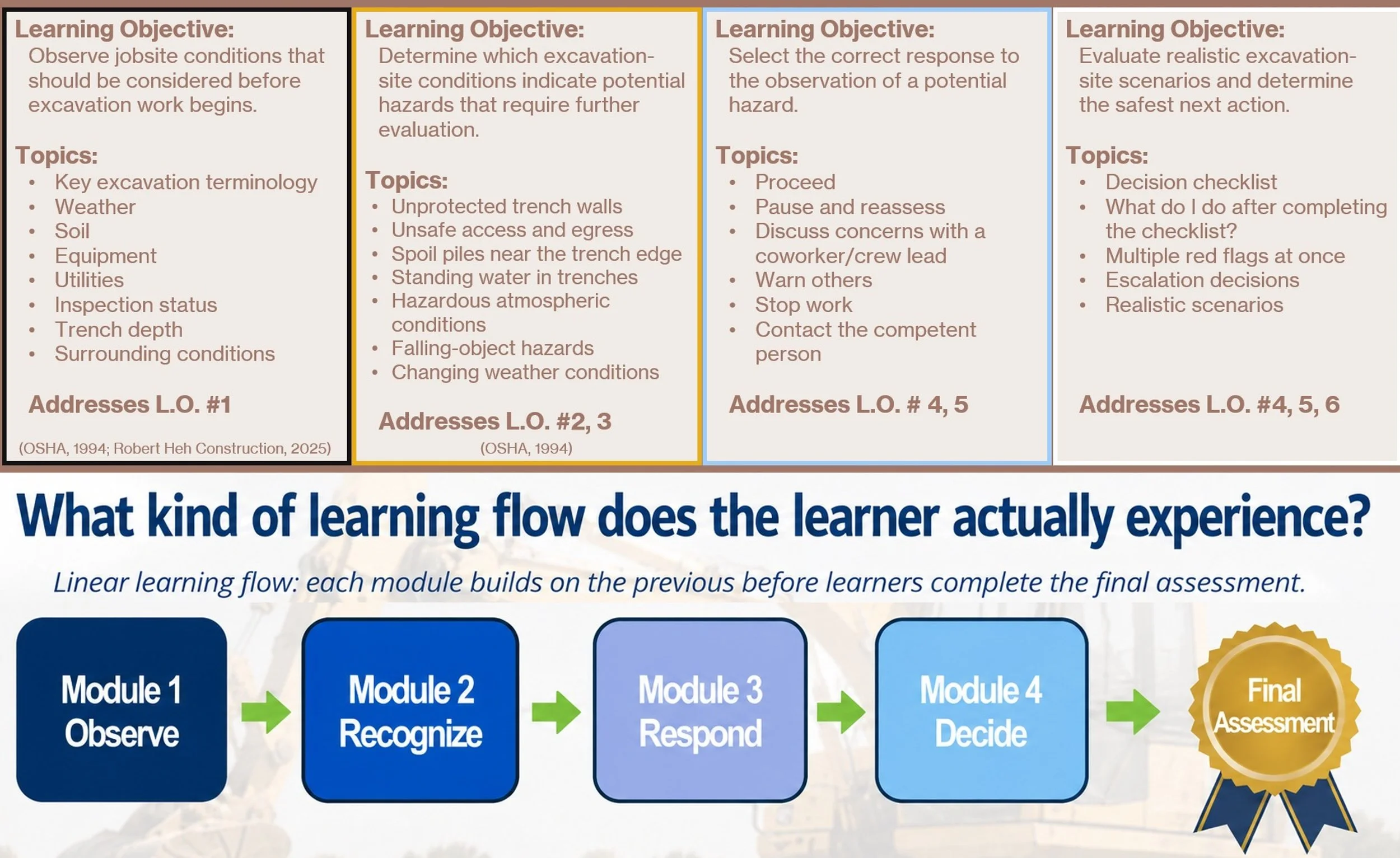
Learning objectives, content mapping, and learning flow ensured each activity built toward authentic workplace decisions
Storyboard
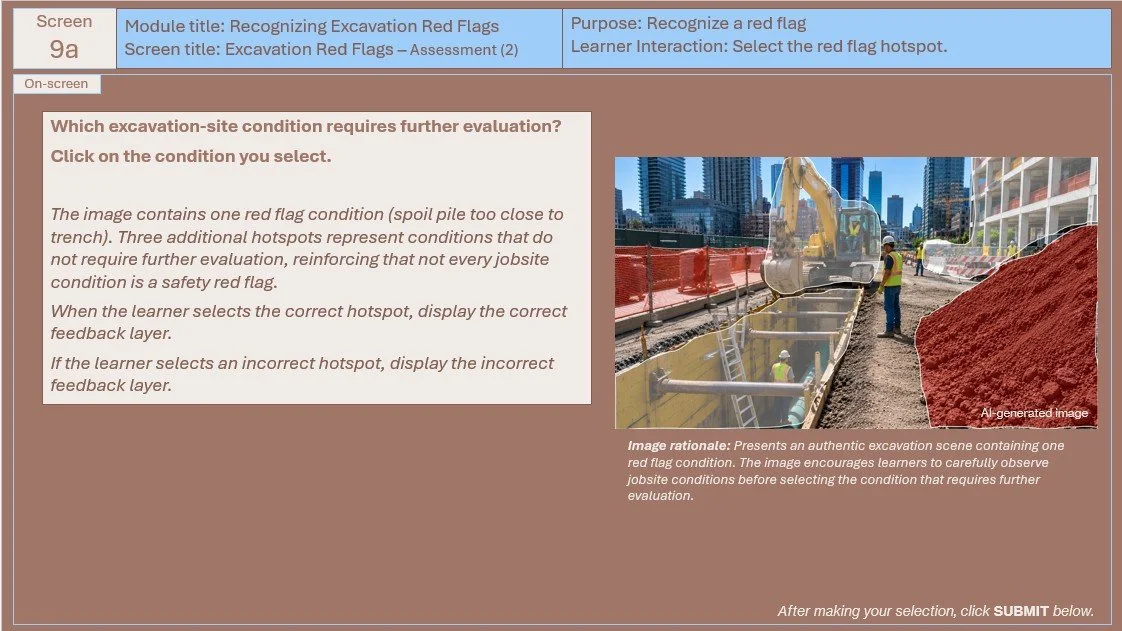
Detailed screen plans defined interactions, feedback, navigation, and developer notes before Storyline development began.
Develop
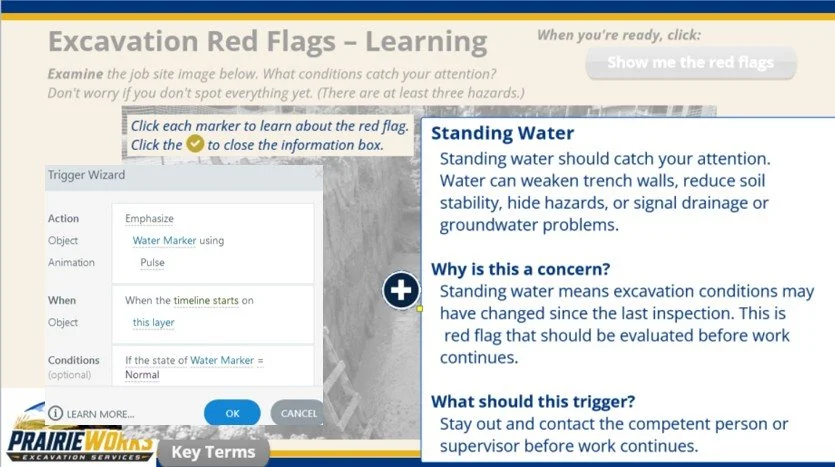
Storyline layers, triggers, hotspots, and custom feedback transformed the storyboard into an interactive learning experience focused on authentic workplace decision-making.
Test
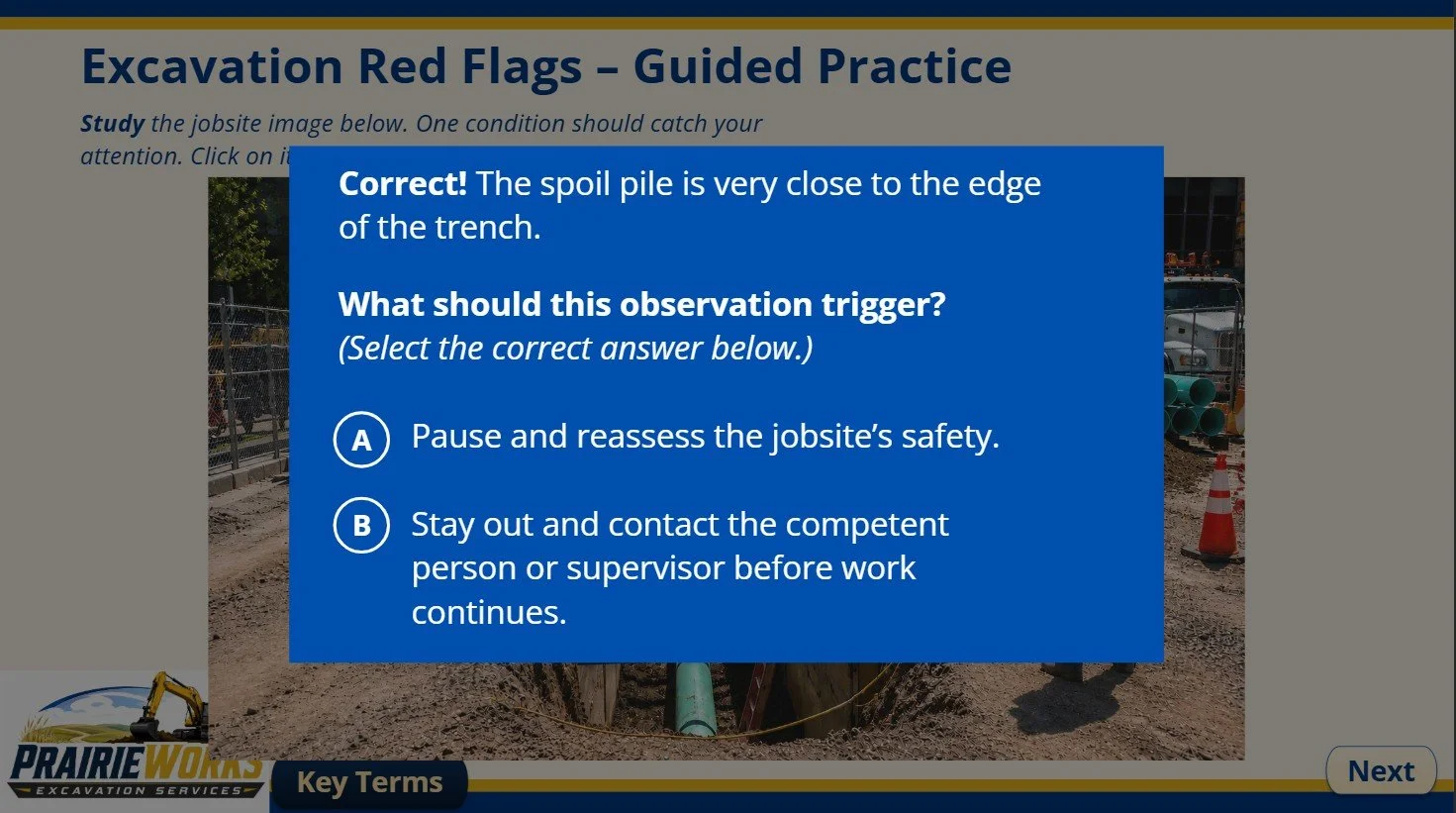
Interactive practice and targeted feedback reinforced learners' decision-making and validated that each interaction functioned as intended.
Publish

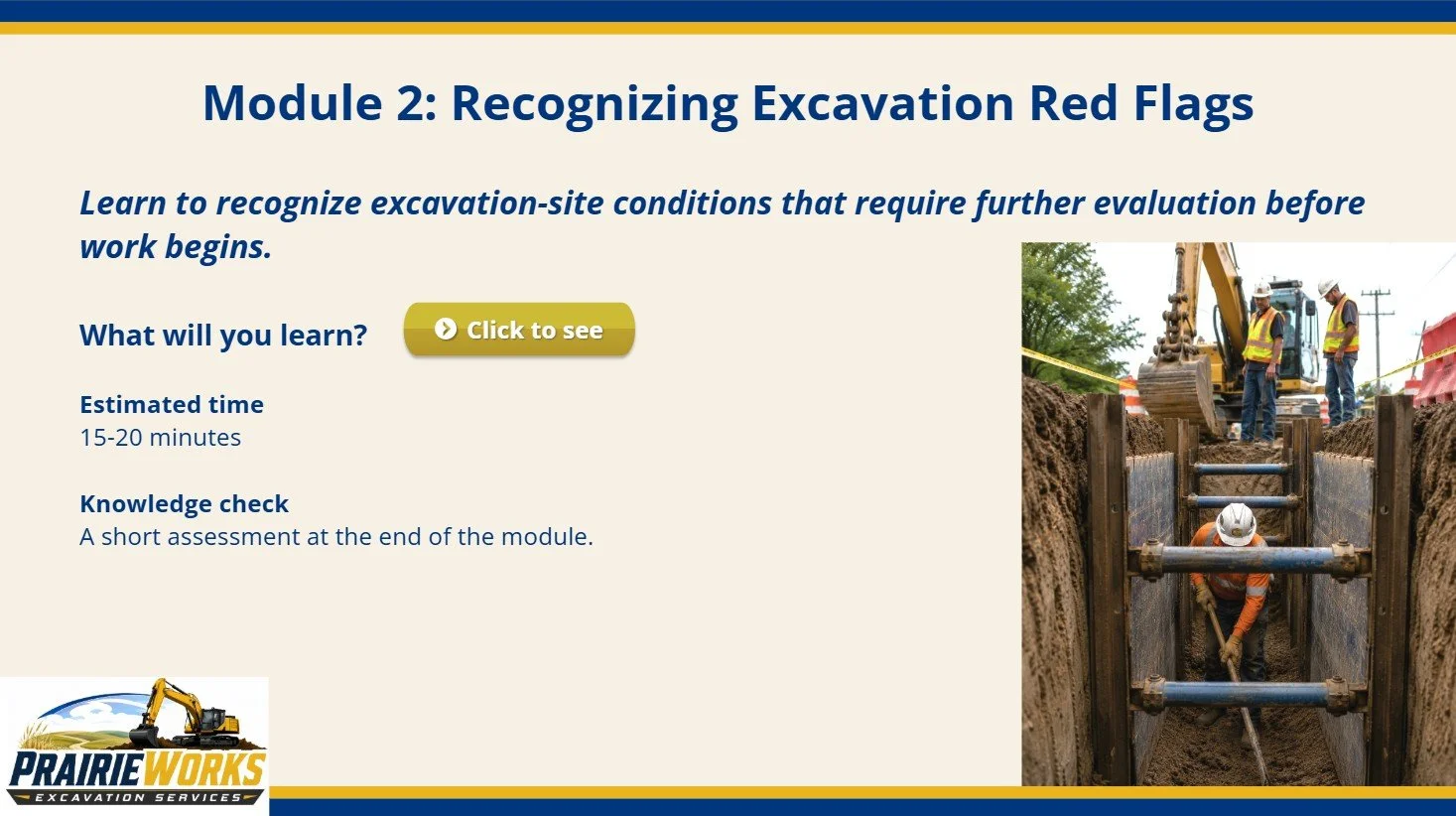
The completed module integrated realistic scenarios, interactive decision-making, and performance-based assessment into a cohesive workplace learning experience.
Evaluation
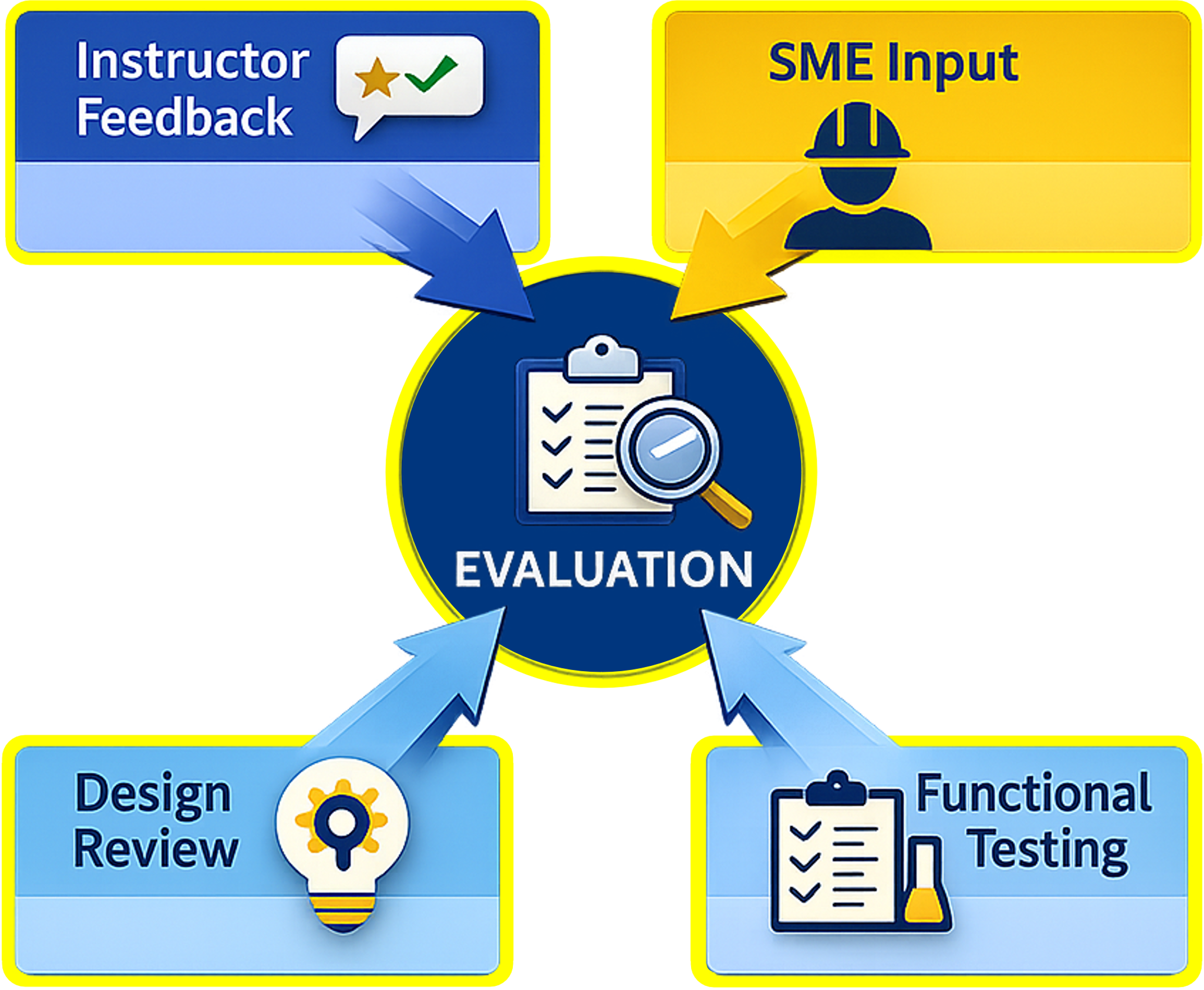
The module was reviewed throughout development to ensure instructional alignment, usability, and authenticity. Feedback from instructors and SMEs informed multiple rounds of refinement before the final implementation.
Learning objectives guided every activity and assessment to ensure consistent alignment throughout development.
Instructional decisions were refined through instructor feedback, including simplifying navigation, strengthening performance-based practice, and refining learner feedback.
Authenticity was prioritized by revising scenarios to mirror realistic excavation-site decision-making rather than testing OSHA memorization.
Usability and accessibility considerations informed the design through consistent navigation, readable layouts, meaningful alternative text where appropriate, and clear learner guidance throughout the module.
Interactive functionality—including layers, triggers, hotspots, and explanatory feedback—was reviewed and tested to ensure a smooth and reliable learner experience throughout the module.

Design Artifacts
Every Storyline learning experience begins long before development. These design artifacts document the instructional thinking behind the project—from learner analysis and learning architecture to detailed implementation planning. Together, they show how the module evolved from concept to a finished learning experience.
1. Learner Analysis
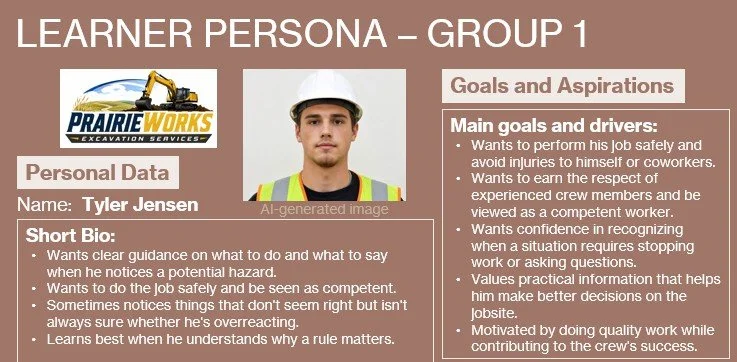
Learner personas captured the goals, challenges, and workplace realities of the target audience, informing instructional decisions throughout the project.
2. Learning Architecture
Learning outcomes, content mapping, and instructional sequencing established a progressive pathway from observing jobsite conditions to making role-appropriate workplace decisions.
3. Storyboard & Development Documentation
Storyboards defined screen purpose, content, interactions, feedback, imagery, and developer notes before those specifications were translated into Storyline interactions and functionality.
4. Evaluation & Iteration
Formative evaluation, instructor feedback, SME input, design review, and functional testing informed iterative refinements to feedback, scenario authenticity, learner guidance, and functionality.

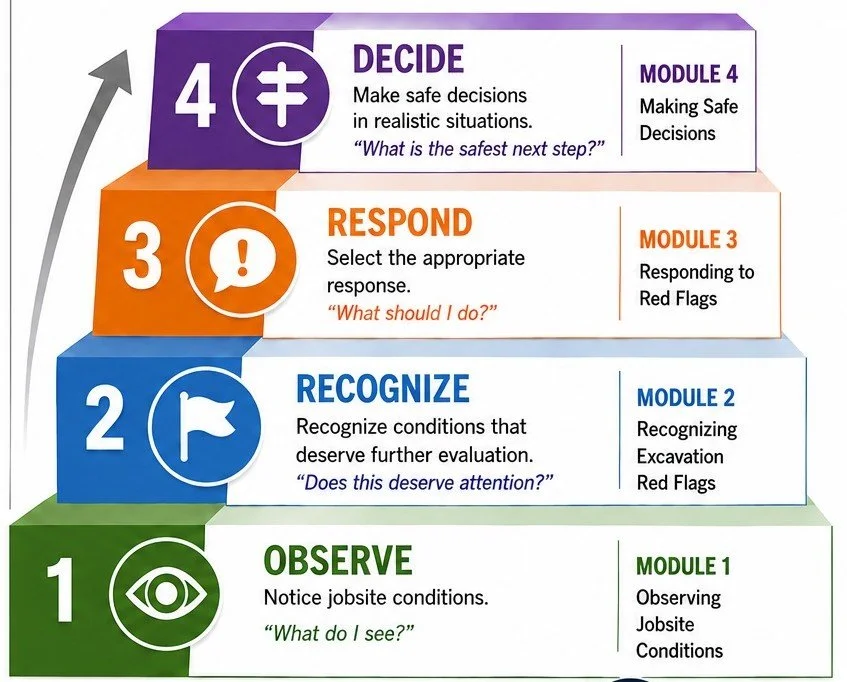
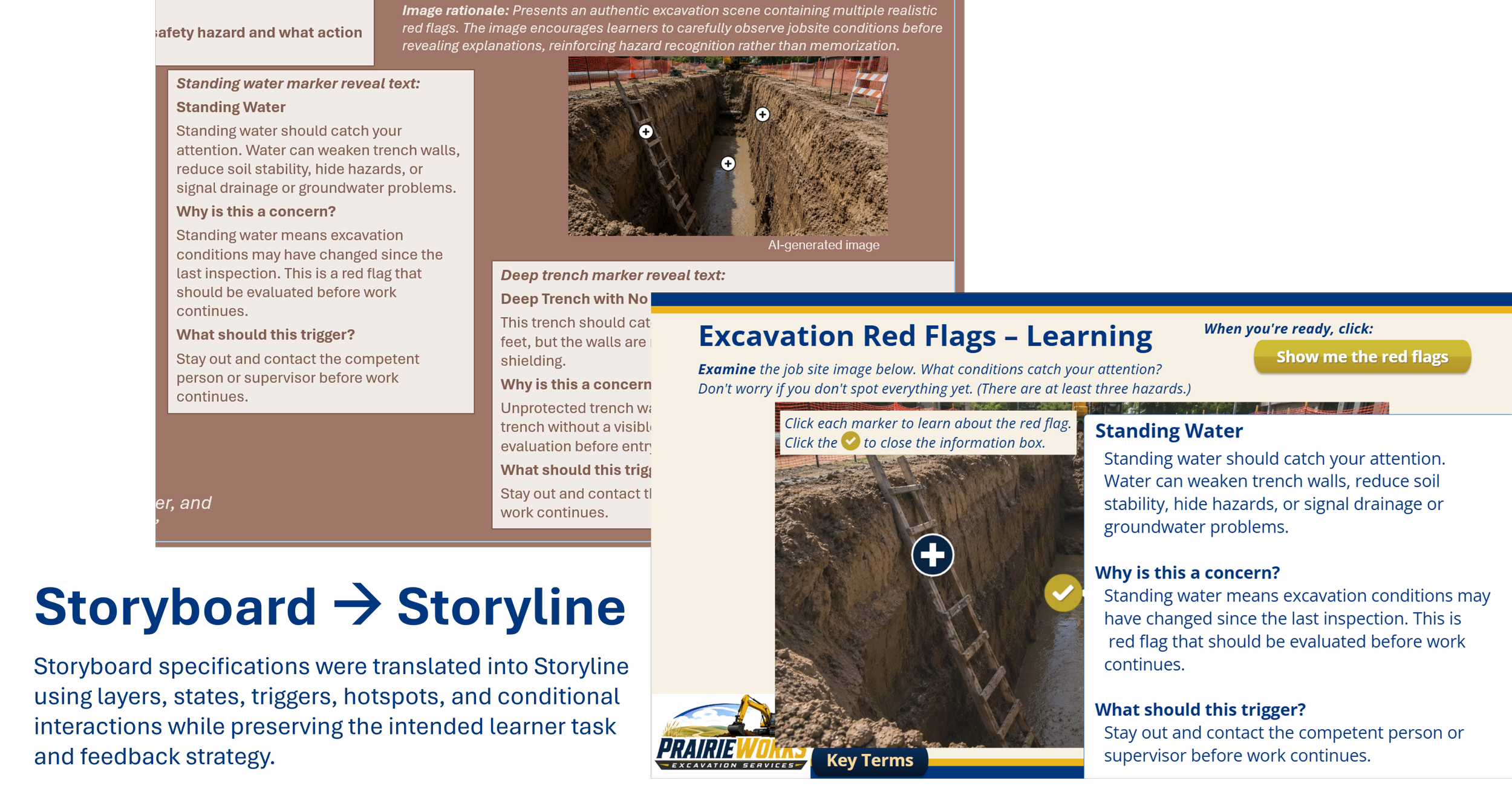
Together, these artifacts illustrate the instructional design process behind the finished Storyline module—from learner analysis and learning architecture through development, evaluation, and refinement.