
What’s That Plant?
Interactive Online Course | Articulate Rise 360
Overview
What’s That Plant? is an interactive online course designed to introduce learners to the practical use of dichotomous keys for plant identification. Rather than presenting keys as static reference tools, the module emphasizes decision-based reasoning and structured observation.
Using examples from dozens of plant species, learners explore morphological features through various interactive activities and guided practice. The course was originally deployed in Canvas as a SCORM package and built in Articulate Rise 360.
The design prioritizes clarity, applied reasoning, and traceable decision-making over memorization.
Outcome / Impact
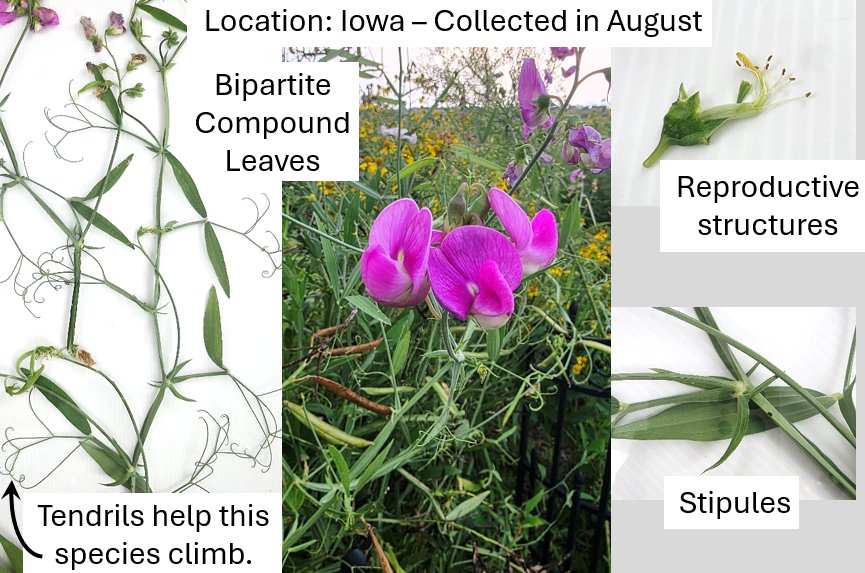
Annotated plant images from the interactive module.
Designed to build practical identification skills through applied decision-making and structured practice.
The Learning Objectives
Read and navigate a printed identification key confidently
Apply core morphology terms to choose the correct lead
Avoid common pitfalls and document a traceable ID path
My Role
Learning experience design and instructional strategy (problem framing, objectives, alignment)
Content architecture and sequencing across a 5-lesson asynchronous course
Interactive build in Articulate Rise 360 (hotspots, knowledge checks, guided practice)
Development of decision-trace worksheet and applied practice scenarios
SCORM packaging and deployment in Canvas LMS
Quality assurance, accessibility review, and usability testing
Iterative refinement based on learner performance signals and common error patterns
Key Design Decisions
1. Practice-Driven Learning
Learners engage in identification tasks from the start rather than passively reviewing terminology. This supports faster skill acquisition and improves confidence in applying dichotomous keys independently.
2. Interactive Engagement
Hotspot interactions require learners to actively examine plant structures, increasing focus and reinforcing observation-based decision-making.
3. Clear Decision Pathing
Each identification step is logged and traceable, reinforcing a repeatable method and reducing reliance on guesswork.
4. Built-In Error Prevention
Frequent beginner mistakes are addressed directly within the instruction, helping learners avoid common misinterpretations and strengthening long-term accuracy.
5. Structured Pacing
Content is organized into concise lessons with embedded checks to maintain momentum, reinforce understanding, and prevent cognitive overload.
Evaluation & Feedback
The course was piloted with 23 undergraduate learners.
96% of respondents rated the course “Very Good” or “Excellent,” including 67% selecting “Excellent.”
No major technical issues were reported, and qualitative feedback indicated that the guided decision pathway and interactive visuals were particularly helpful.
Findings informed iterative refinements to strengthen clarity and decision-trace guidance.

Additional Screenshots
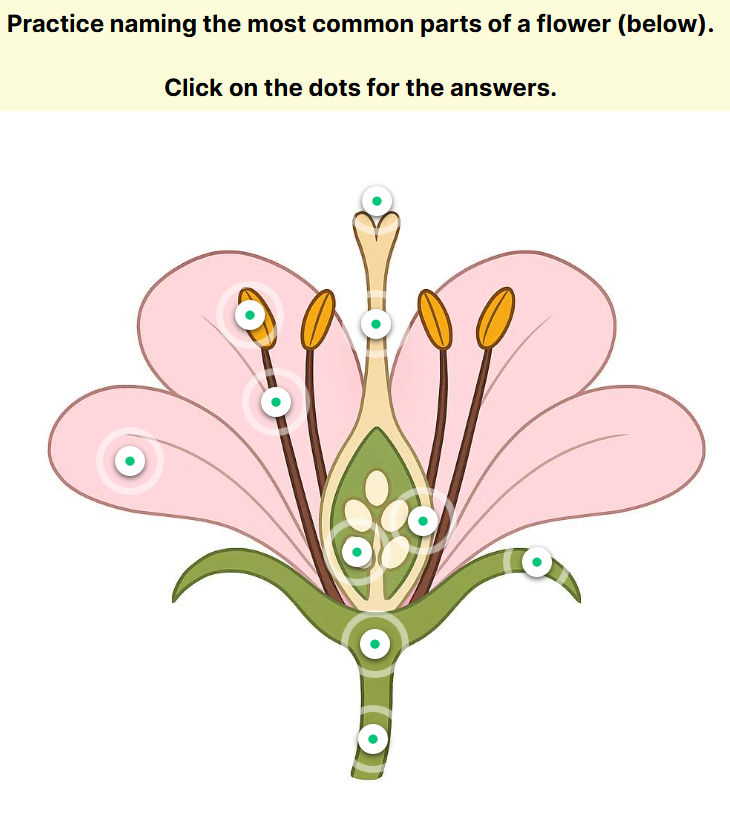
Interactive hotspots identifying morphological features.
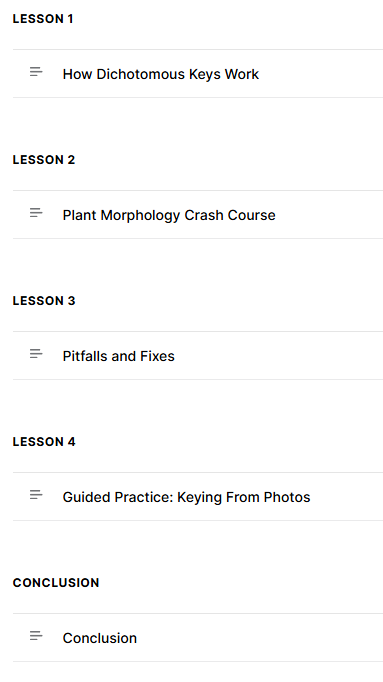
Module structure showing lesson progression and logic.
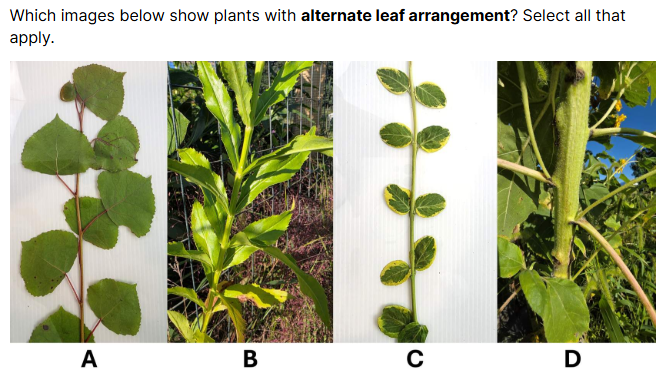
Embedded check reinforcing couplet selection logic.
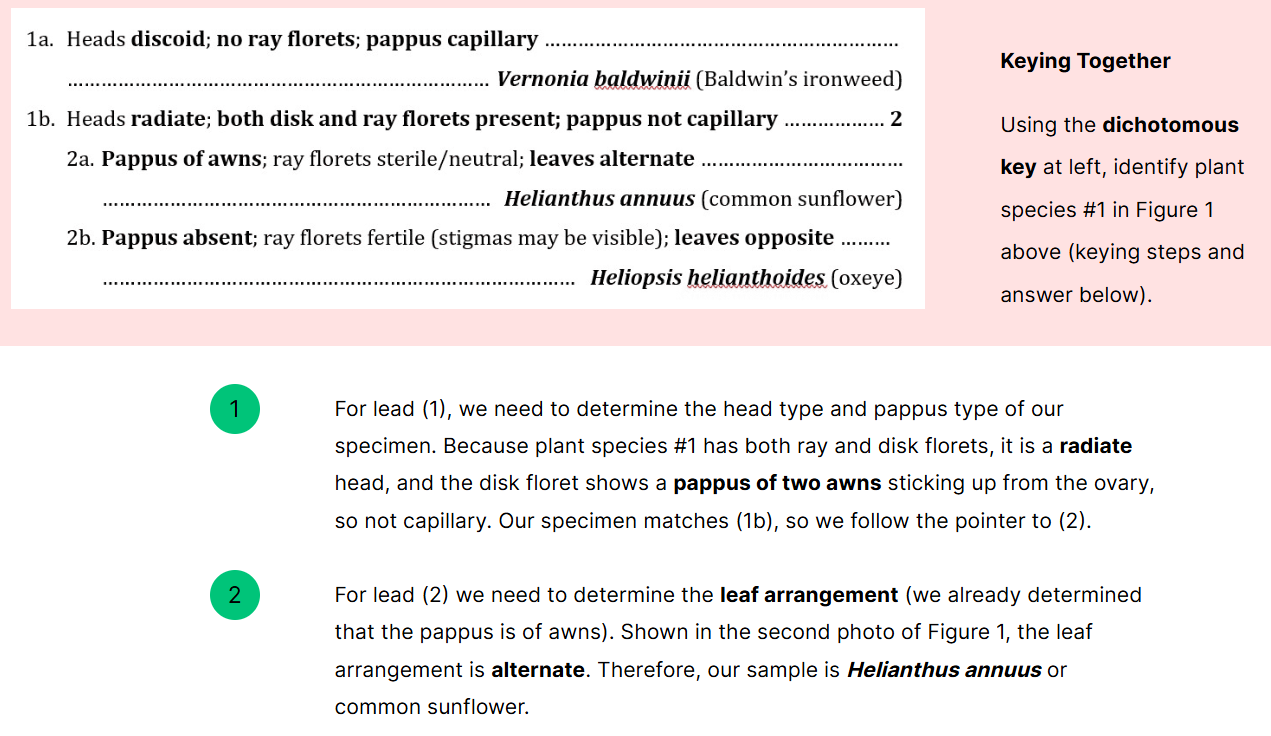
Guided ID practice with step-by-step decision path.